When it comes to dream builds, there’s pushing the limits, and then there’s taking a Dodge Viper, lifting it, adding massive tires, and preparing it for dirt, dunes, and canyon runs. That’s exactly what Matt Brown from SuperfastMatt set out to do. It’s a project that demands precision, creativity, and access to high-quality custom parts—which is where SendCutSend comes in.
Builder: Matt Brown, aka SuperfastMatt
Project: Off-Road Dodge Viper
Industries: Automotive, Fabrication
SendCutSend Services: Laser Cutting, Bending, Anodizing, Dimple Forming
A Dodge Viper… Built for the Dirt?
When SuperFastMatt—engineer, fabricator, and YouTube creator—announced his plans to build an off-road Dodge Viper, the internet had questions, but Jim Belosic with SendCutSend said “take my money.” SendCutSend has partnered with SuperFastMatt for years on his countless building journeys, but the Viper was instantly something SendCutSend wanted to be all in on as the title sponsor of the build.
When you think of a Viper you don’t typically think of it’s offroad capabilities, but for Matt, the idea wasn’t just a stunt, it was a longtime passion project finally coming to life.
Growing up with a Viper poster on his wall, Matt always loved the car’s outrageous design.
“The burnouts don’t disappoint, the looks don’t disappoint,” he explained, but beyond that, the stock Viper left a lot to be desired. So he set out to build one that turned it up a notch, or twelve.
A Vision Brought to Life
From the outset, this was never going to be a full rock crawler or rally car. Instead, Matt envisioned a street-legal off-roader with real capability and head-turning style.
The Viper would be reimagined as a rig you could take on a trail run and turn heads with at a car meet. While the original plan called for aggressive mud tires and full-size spares, he later dialed it back to something more practical, though no less impressive.
That balance of utility and performance is visible throughout the build, especially in the custom suspension setup. Here, SendCutSend played a crucial role.
Laser-Cut Parts for a Custom Suspension
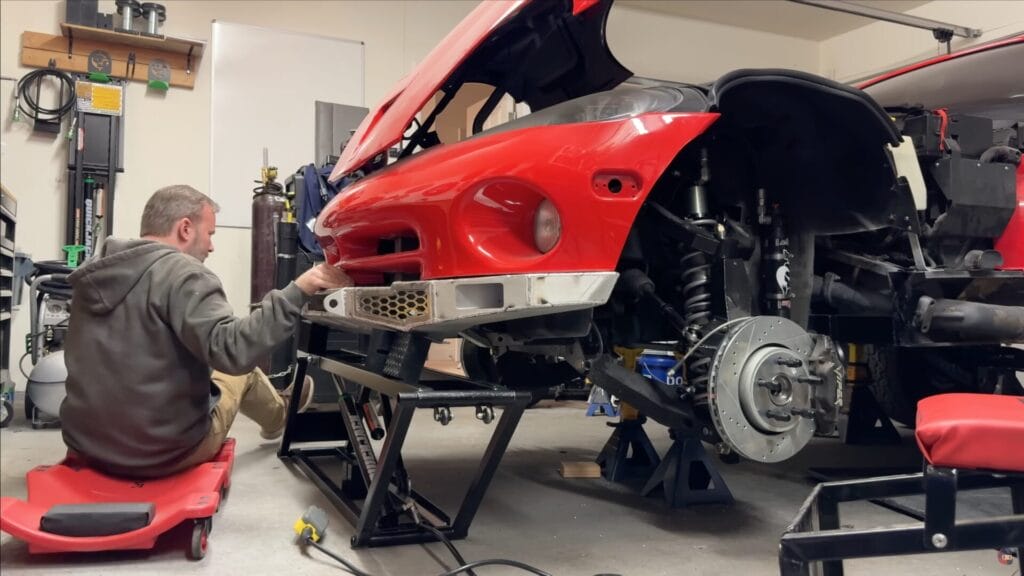
Matt used SendCutSend to fabricate most of the custom components on the car, particularly the front and rear suspension. From control arms and uprights to mounting tabs and brake brackets, nearly every part was designed in CAD, cut to spec, and welded together and into place.
He estimates the front suspension alone includes around 40 pounds of laser-cut steel. The rear setup, built around a Jeep axle, is mounted with a network of laser-cut steel plates that tie it seamlessly into the Viper’s modified frame.
Precision was key, and SendCutSend’s reliable tolerances and fast turnaround let Matt iterate quickly and cleanly — no grinding, no guesswork.
“I rarely want to be cutting, grinding, and drilling metal,” he shared. “I’d rather spend my time one level up from that, welding and assembling laser-cut parts.”
Design Meets Speed
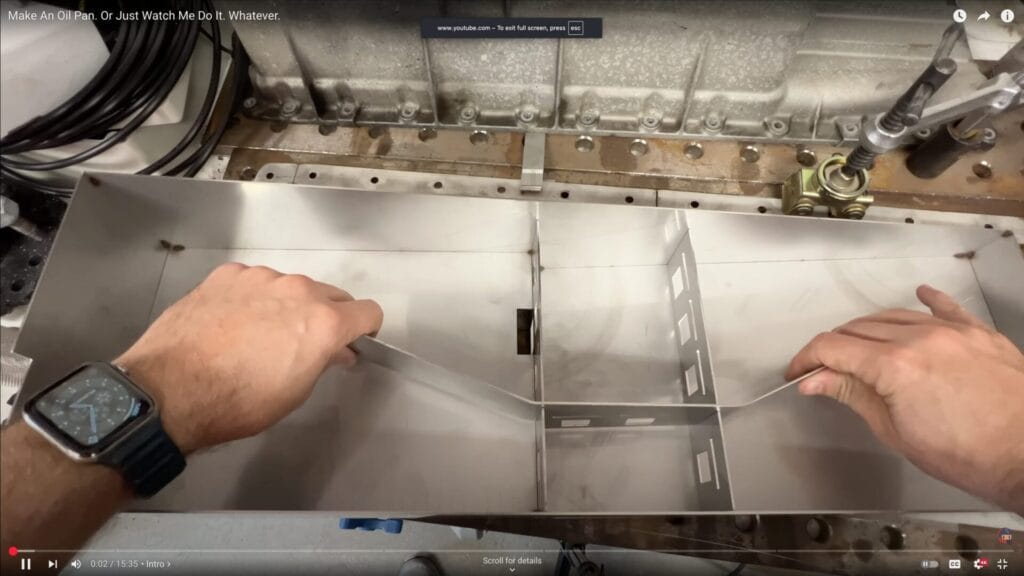
Matt takes a CAD-first approach to every build, often pairing digital design with physical prototyping via 3D printing. Once he’s confident in the fit and form, he moves to metal. While he occasionally fabricates simple pieces by hand if he’s looking for a challenge, he often relies on SendCutSend for higher efficiency and accuracy.
“Do I want to do this?” is how he decides whether to cut and drill parts himself. More often than not, the answer is no, especially when SendCutSend can do it faster and cleaner.
He keeps materials simple: mild steel and 5052 aluminum for the majority of parts, with the occasional stainless, chipboard, or hardened steel for specialty components. Forming services like CNC bending and dimple forming have also helped him streamline the build without massive shop equipment eating up his garage space.
From Idea to Execution
One major strength of using SendCutSend has been the ability to iterate quickly. Matt isn’t precious about getting things perfect the first time. In fact, he embraces the process of trial and error.
“I would rather just make something and then see what’s wrong, rather than try to get it right the first time,” he declared. “It’s also just more fun. Make it, break it, make it again better, repeat until finished.
Take the exhaust covers, for example. One version didn’t work aesthetically once installed, so he scrapped the design and went back to the drawing board.
Admittedly, he shared that he doesn’t have a great eye for design. Combined with CAD’s greatest problem of parts never looking the same as they do on screen when light hits them, that limitation means sometimes taking cues from other designs to get it right.
That kind of freedom, to design, cut, test, and redo, is only realistic when the cost and turnaround time are low enough to support it.
Even early in his fabrication journey, Matt saw the benefits. On a previous project, he replaced a $1,000 off-the-shelf suspension kit with a $280 custom solution using SendCutSend — all designed in CAD.
More Projects, Same Formula
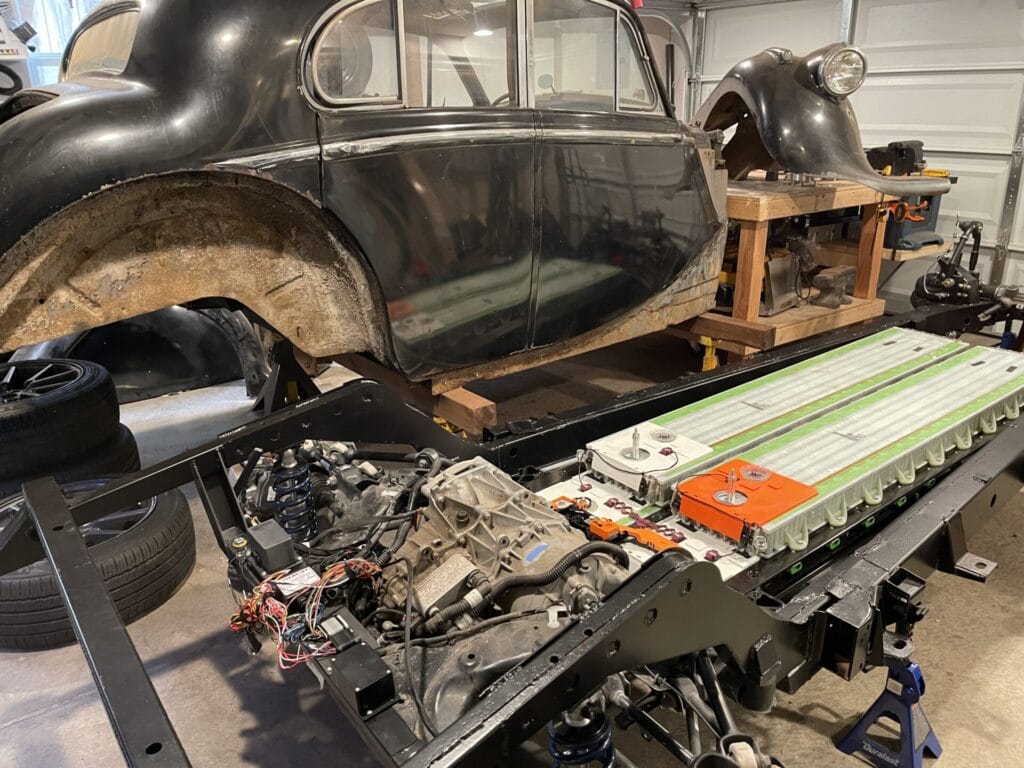
While the Viper may be one of Matt’s wildest projects, it’s far from his only one. He’s used SendCutSend across a wide range of builds, including his electric Jaguar, race car, and even his current camper van project, which is being built to tow both the Viper and his Salt Flats race car.
The consistent benefit? Precision-cut parts that reduce fabrication time, improve quality, and eliminate the need for stockpiling materials in his garage.
“One of the biggest benefits that I don’t hear people talking about is the material selection,” shared Matt. He’s not talking about SendCutSend vast materials library, but rather the time and space-saving aspect. “I don’t have to drive to the metal store, and I don’t have huge racks of dozens of different thicknesses and alloys rusting away in my garage.”
SendCutSend has also changed his approach to fabrication, allowing him to create assemblies that fixture themselves together, cutting down on jigs, setup, and trial-and-error fits.
Building for the Algorithm (and the Community)
His content leans technical by design, maybe in part due to his professional background that includes Tesla, Apple, and NASCAR. But it’s a deliberate choice that resonates with his audience.
“I try to make it somewhat accessible, but I never dumb it down,” he explained. “The technical aspects are part of what makes it engaging.”
Matt is bringing real-world experience to wildly impractical ideas, executed with precision, (some) planning, and a willingness to problem-solve in real time.
His use of SendCutSend has become such a fixture that viewers call it out when he fabricates a part without it. That kind of transparency helps inspire others, even if he admits he might make things sound easier than they are. “But maybe that’s a good thing,” he added. “I probably wouldn’t start half my projects if I knew how much work they’d actually be.”
Thanks to platforms like YouTube and Instagram, Matt believes more makers are building with confidence and finding their niche audience along the way.
Advice for Aspiring Builders
Matt’s fabrication philosophy is straightforward: build first, perfect later. For anyone thinking about using SendCutSend, his advice is just as clear: start learning basic CAD (which SendCutSend makes easy with their new and free Education Series). It opens the door to faster, smarter builds and gives creators the flexibility to iterate without wasting time or money.
“You’ll learn so much the first time around,” he said. “Just expect to make it over again — and better.”
He’s also a firm believer in simple tools making a big difference. One of his most-used shop items? A telescoping magnet. “I drop so many tools in hard-to-reach places, and the magnet can always find them.”
As for the mistakes? Like most builders, he’s made his share, but one lesson keeps coming back: always secure your fasteners. “I keep learning (and forgetting and re-learning) to put lock nuts or threadlocker on every fastener. They always vibrate loose.”
Bring Your Next Big Idea to Life
Whether you’re restomodding a classic, building a CNC-machined rear swingarm for a racecar, or maybe even someday EV swapping a Pontiac Fiero — yes, SuperfastMatt fans, we’re hopeful too — laser-cut and machined parts can take your project to the next level.
With fast turnarounds and a huge material library, SendCutSend makes custom fabrication easier than ever.
Follow SuperFastMatt on YouTube to see the full build, and if you’ve got your own big idea brewing, get in touch to learn how we can help.