CNC Bending services

10 Materials

.030"- .250" Thick

+1-2 days

Production Time

Bending sizing and options

Part Sizes
A.
.375" x 1.5"
Min part size
B.
30" x 44"
Max part size
C.
16" x 44"
Maximum Bend Length
10 MATERIALS, .030" - .250"
5052 H32 AluminumBrass4130 ChromolyCopperG90 Galvanized SteelMild SteelPolycarbonate304 Stainless Steel316 Stainless SteelGrade2 Titanium
Tolerance
+/- 1 degree or better

Fast turnarounds to keep your projects moving

SendCutSend offers plastic and sheet metal bending and fabrication on flat sheet metal and CNC routed parts with no minimum quantity.

Accurate, repeatable bends

Formed to match your design intent with consistent results across parts and batches.

Fast Turnarounds

Bending is done in-house, adding minimal time to standard production.

Simple, all-in-one workflow

Upload your flat pattern, set your bends, and get instant pricing.

“SCS beats my local shops in every dimension… Did some bends my usual shop would have baulked at.”

Rzad Design

Available materials for Bending

We offer CNC bending for a wide range of materials including aluminum, brass, chromoly, copper, steel, mild steel, polycarbonate and titanium.
For a full list of materials and available thicknesses, please visit our materials page.

One step to a finished part
Built to take abuse
Looks as good as it performs

Upload now for instant pricing

Bending adds 1-2 days to production. For the fastest lead time, order bent parts separately

Affordable pricing. Up to 70% off in bulk.

G90 Galvanized Steel .059"

5.4" x 6"

Laser Cutting, Bending, Hardware Insertion

Qty 1:

$31.76/ea

Qty 100:

$8.32/ea

Cold Rolled Steel .119"

6.3" x 7.4"

Laser Cutting, Bending, Dimple Forming, Hardware Insertion, Tapping, Powder Coating

Qty 1:

$73.33/ea

Qty 100:

$16.21/ea

Polycarbonate .118"

4" x 5.5"

CNC Routing, Bending

Qty 1:

$24.98/ea

Qty 100:

$7.84/ea

Design guidelines for bent parts

Following a few basic design guidelines will help ensure your parts are bent properly and pass SendCutSend review.

Part size and bend limits

Sizing limits apply to flat parts before bending
Min part size (flat) .375″ x 1.5″
Max part size (flat) 30″ x 44″
Maximum bend length 16-44″ depending on thickness
Max Bend Angle  130°
See  Processing Min/Max Size Charts for material specific limits our

Use our bending specifications

Bend radius and K factor are set per material thickness. Design your parts using our specs so they form as expected, we don’t offer custom bend radii.

Find specs in our Bending Calculator or Material Catalog.

Working in CAD? Import our gauge tables for Autodesk Fusion or SolidWorks to apply the latest specifications automatically.

File setup

Upload a 2D vector file (.dxf, .dwg, .ai, .eps) or a 3D file (.step, .stp). You’ll confirm bend angles and flange orientations in a 3D preview during checkout.

SOFTWAREFORMATBEND LINE
Fusion.dxf, .step, .stpSolid line (default)
Adobe Illustrator.aiSolid, separate color from cut lines
SolidWorks.dxf, .step, .stpDashed line (not hidden)
AutoCAD.dxf, .step, .stpDashed line (not hidden)
CorelDraw.epsSolid, separate color from cut lines
Inkscape.epsSolid, separate color from cut lines

2D files: Mark bend locations with a line at the center of each bend. Line color doesn’t matter, our system ignores it.

3D files: No bend lines needed. Model your part with our bend specs, save, and upload. See how to configure STEP file bends.
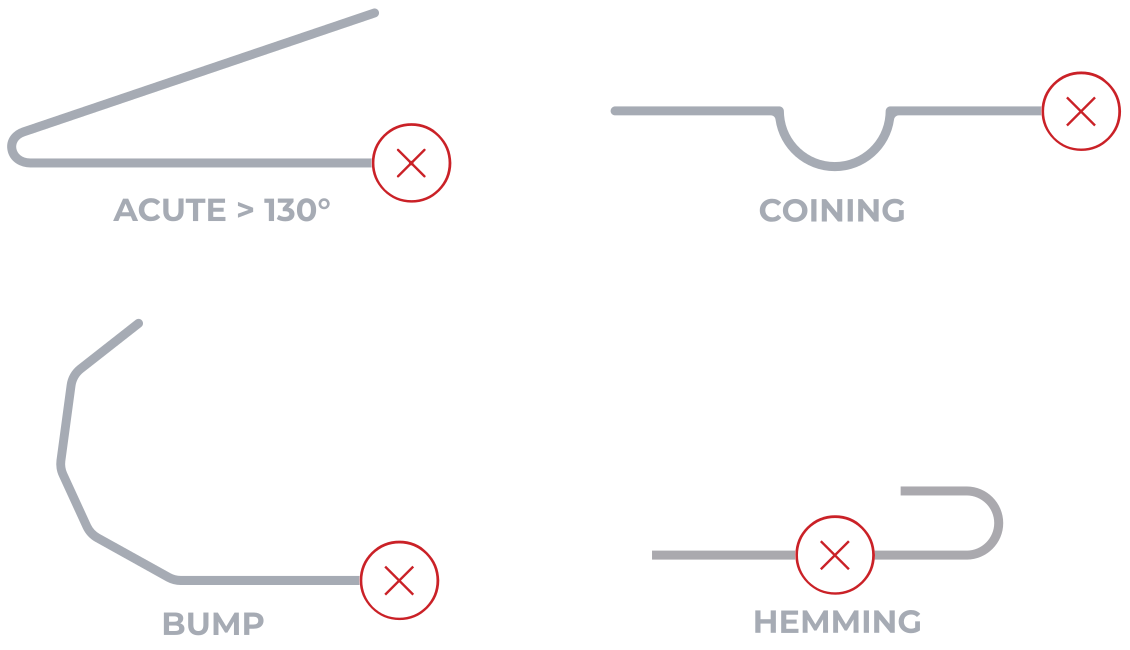
What we can't bend

  • No acute angles greater than 130°
  • No obtuse angles less than 5°
  • No curl, bump, or roll forming
  • No coining or hemming
  • No joggle bends in polycarbonate

What to expect with bent parts

All bent parts:

  • Bend-to-edge tolerance: +/- 0.015″ (each additional bend adds at least 0.015″)
  • Some bulging at the ends of bends is expected
  • Witness marks from the bending process will be visible, these can become deeper and more noticeable depending on the material
  • We don’t offer special protection for cosmetic parts at this time

Sheet metal bend angle tolerance:

  • Bends up to 24″: +/- 1°
  • Bends longer than 24″: +/- 2°

Polycarbonate bend angle tolerance:

  • Bends up to 24″: +/- 5°
  • Bends longer than 24″: +/- 7°

Polycarbonate-specific considerations:

  • Adjacent flanges bent in the same direction need clearance.
  • Polycarbonate is over-bent to achieve the desired angle, so we recommend 1:1 clearance to material thickness
  • Minor surface edge cracks may appear depending on material thickness and bend angle
  • Noticeable cracks will appear in stressed areas if adequate bend relief is not provided

Flange requirements

Minimum flange length depends on material and thickness — check the specs on your chosen material in the Material Catalog.

For U-channel and C-channel bends:

  • Sheet metal: base must be at least 2x the flange length (2:1 ratio)
  • Polycarbonate: base must be at least 3x the flange length (3:1 ratio)

Learn more about channel bend exceptions for thin sheet metal

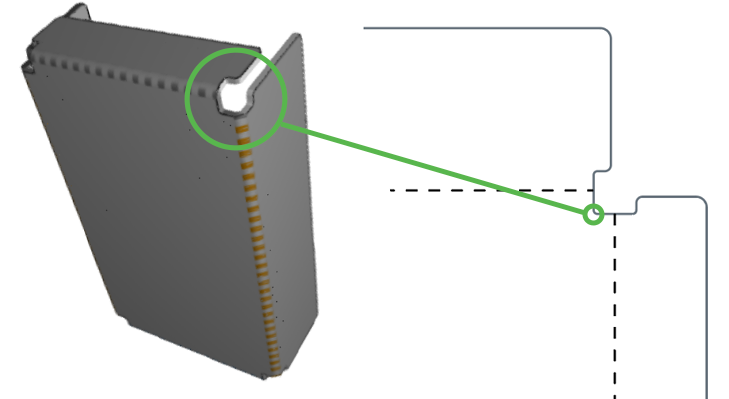
Bend relief

Bend relief notches reduce stress on inner radii and prevent corner tearing or bulging. This is critical for polycarbonate, which cracks without adequate relief.
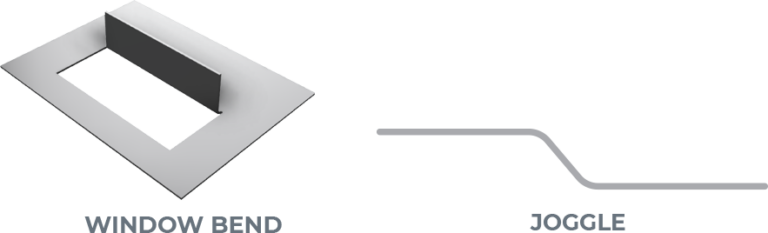
Window and joggle bends

Window bends are allowed up to 90° for sheet metal and polycarbonate. More acute angles need review by our team.

Joggle bends are allowed up to 90° for sheet metal only. Min and max joggle flange values are on each material’s spec chart.
Odd flange shapes

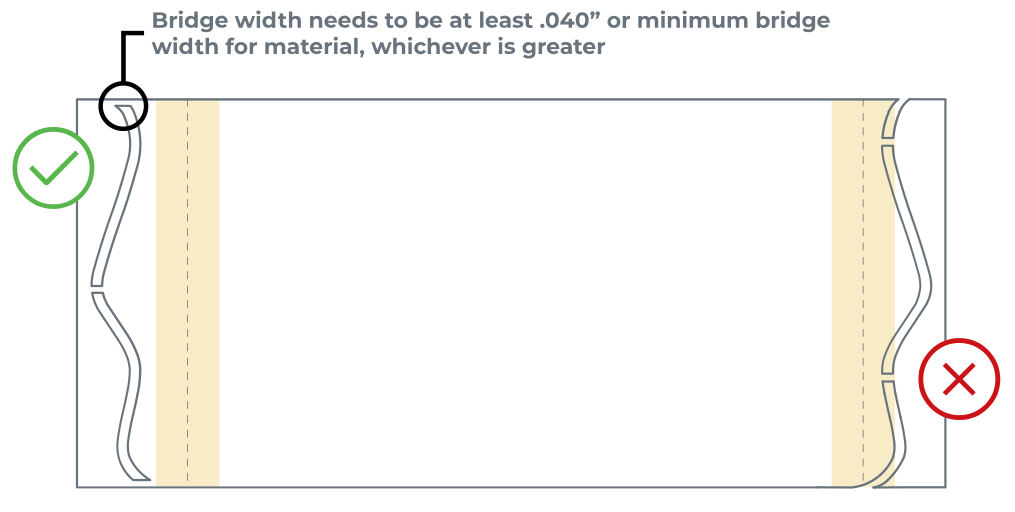
We can bend irregular flange shapes, but we need a flat surface parallel to the bend. Add break-off tabs to create a straight reference edge, then remove them after you receive your part.
Our process: air bending

We form sheet metal and plastic with air bending, where the punch presses the material into a V-die without bottoming out. This affects bend radii and is especially important to understand for polycarbonate.

Learn more about air bending

Die lines and feature distortion

Die lines are witness marks left where the tooling makes contact with your part during forming. Cut features that fall within die lines or the bend area will distort as the material stretches.

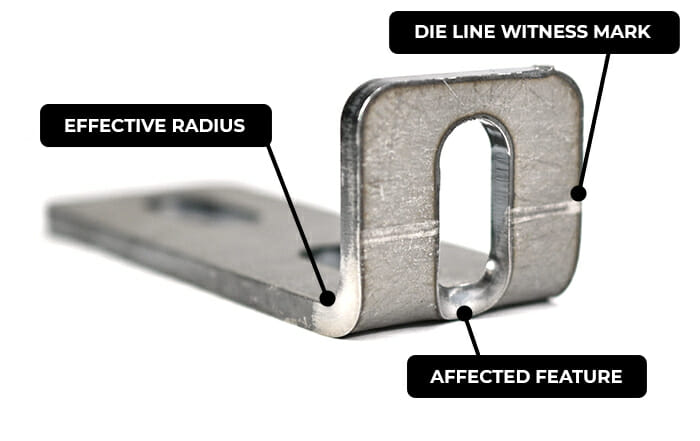
Learn how to avoid feature distortion in our Bending Deformation Guidelines

Common issues to avoid

Combined lines: Bends on a common axis must be joined. If they’re separate, each will be treated as an individual bend.

Intersecting bends: We can’t bend intersecting lines that don’t have separate flanges.

Incomplete bends: A bend must extend all the way across the area being bent. We can’t form partial bends.

Insufficient contact: Flanges need to meet the minimum flange length for at least ~50–60% of the bend’s length on both sides to provide enough press brake support. Thicker materials (.187″–.250″) need more contact.

Insufficient or missing bend relief: Certain designs require bend relief to avoid damage to the part. Without proper relief, a part cannot be bent accurately. This is critical for polycarbonate parts since the material is prone to cracking.

Additional bending resources

If you’re designing parts for powder coating, these resources may help:

Pre-flight checklist

SendCutSend reviews

Customers love getting their sheet metal parts from us

Top Quality Store

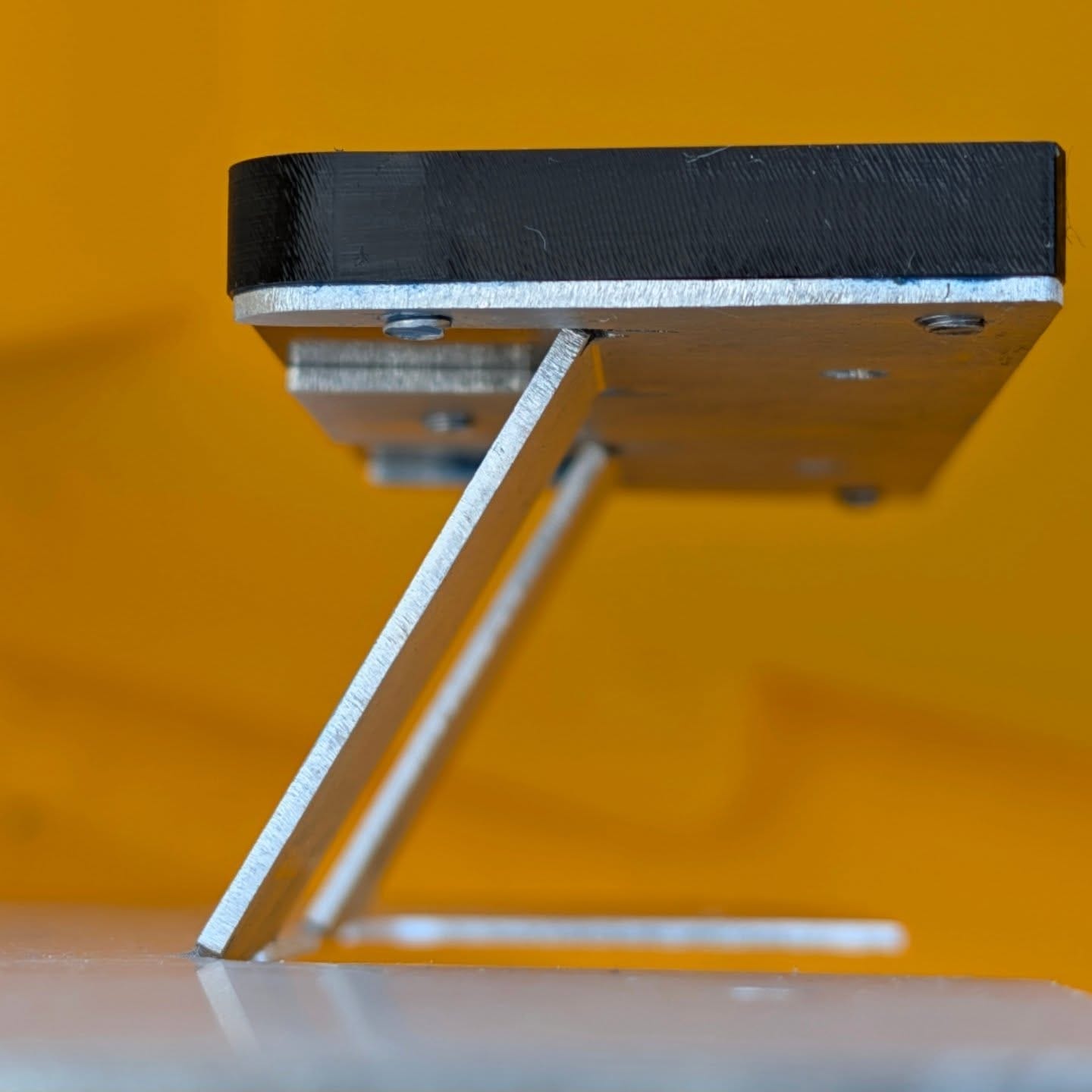
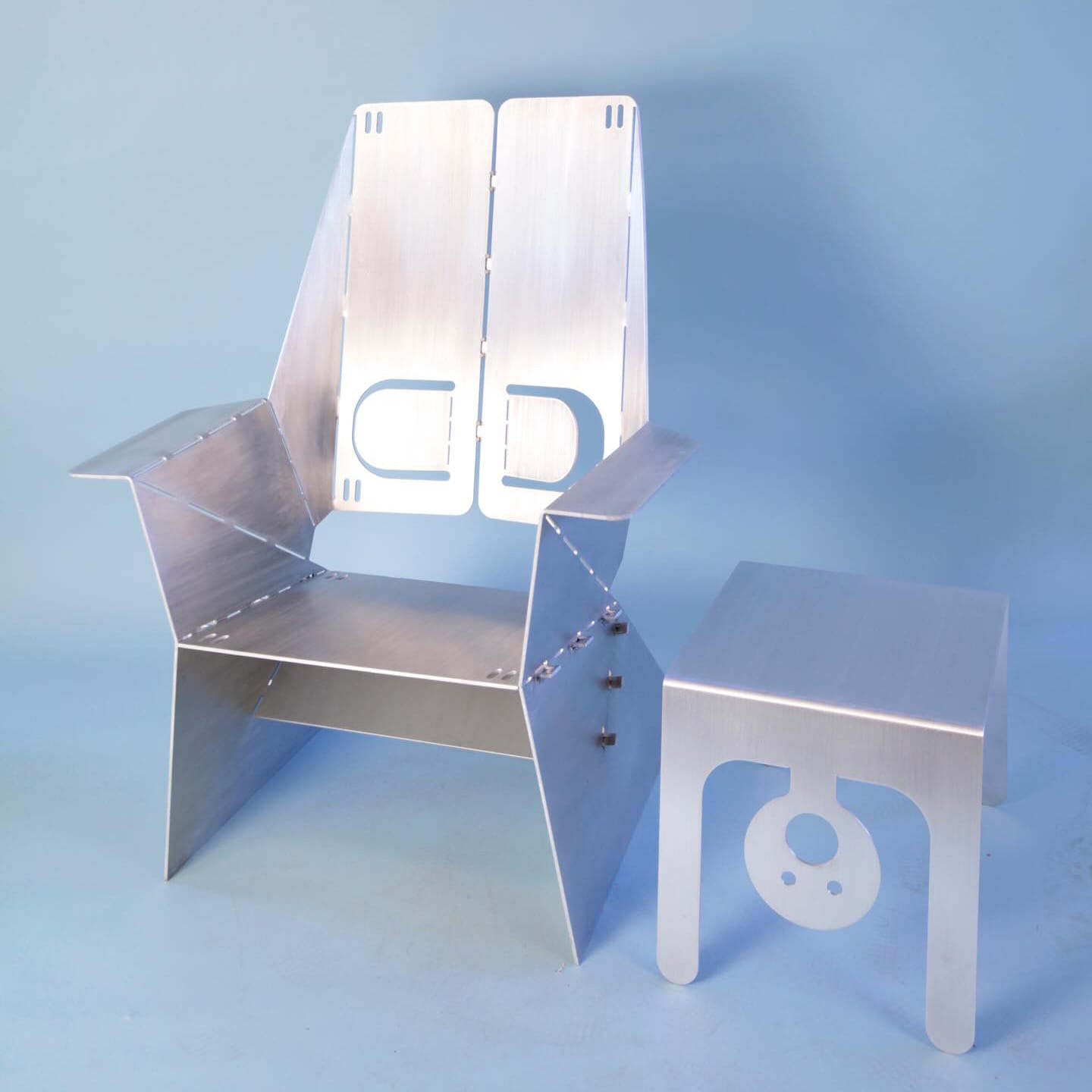
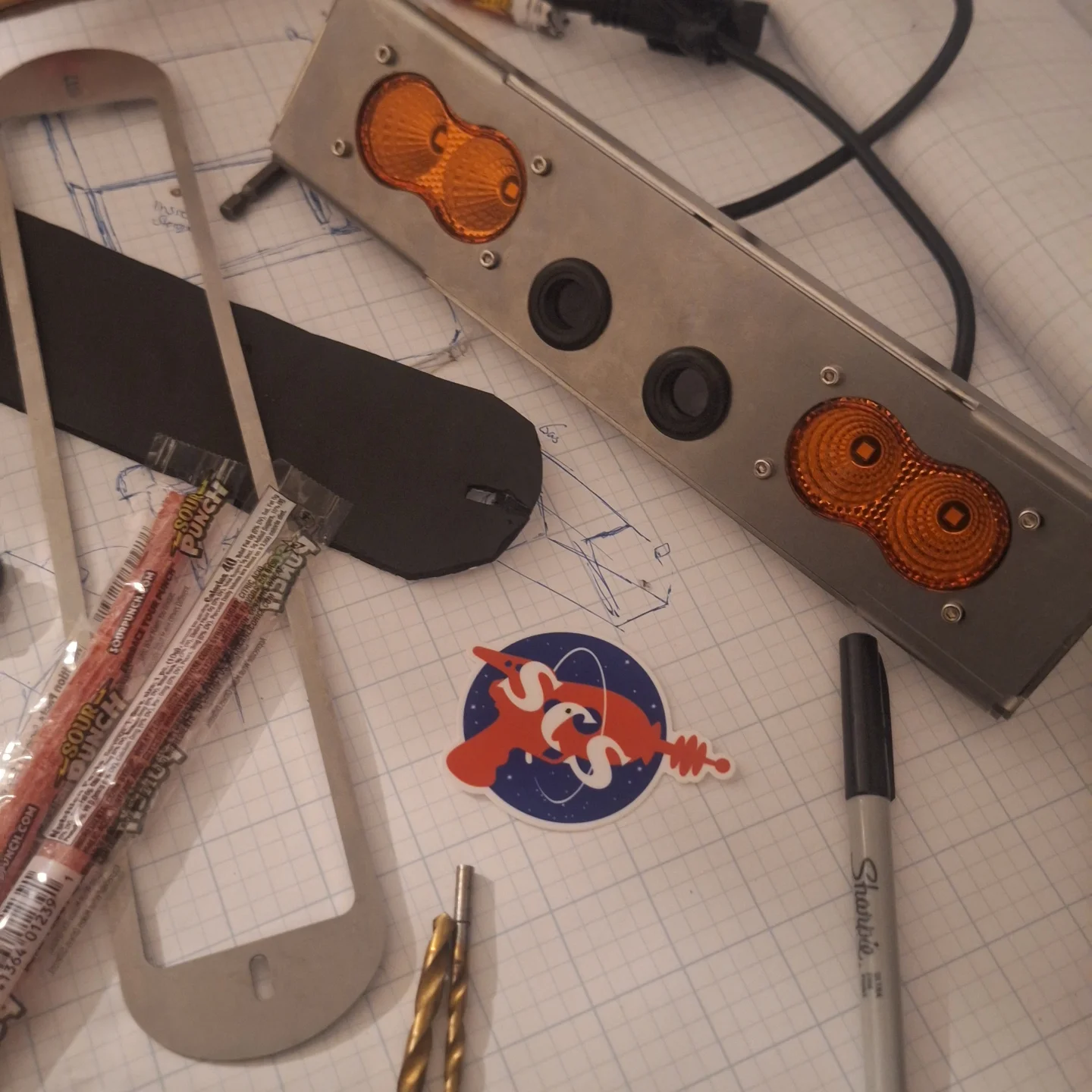
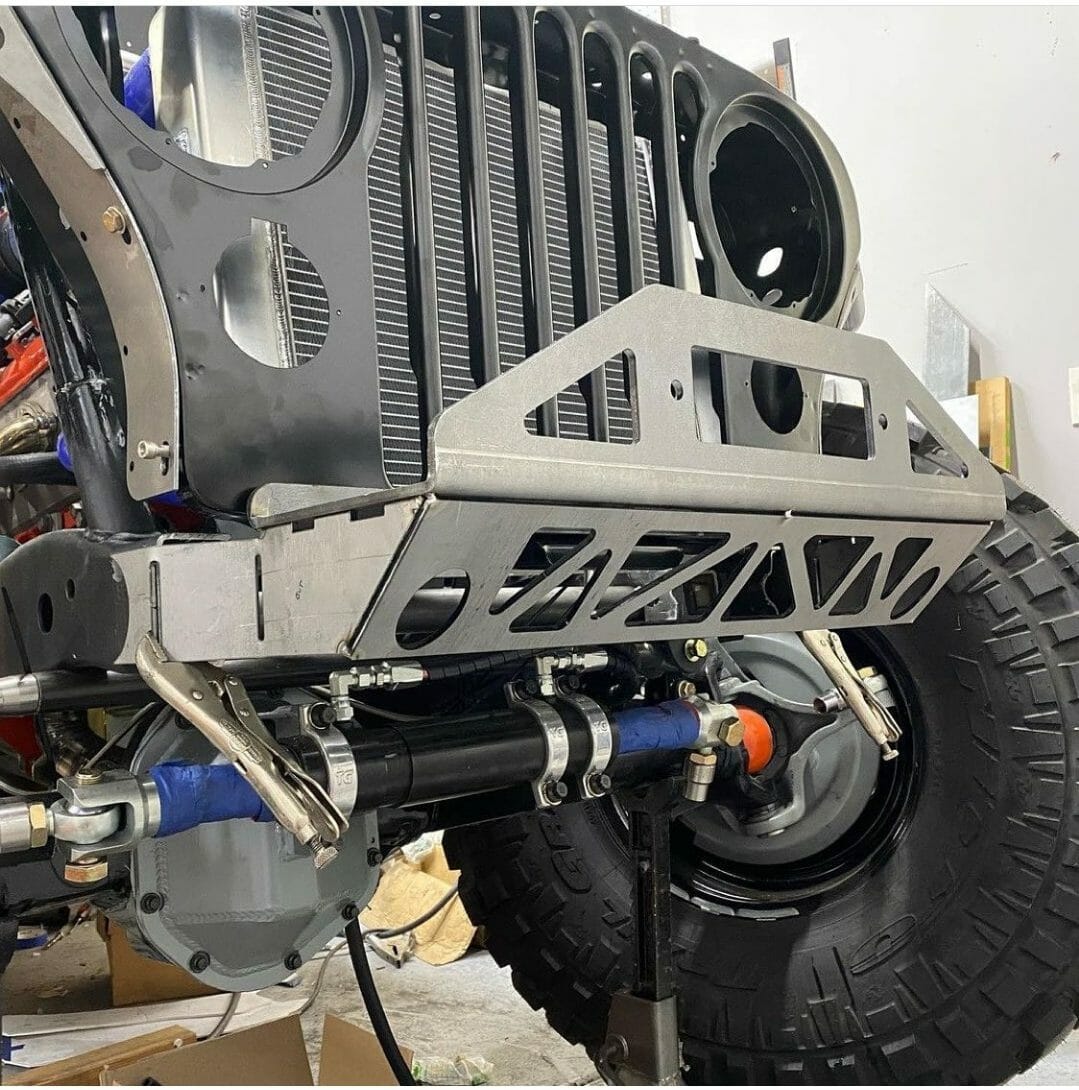
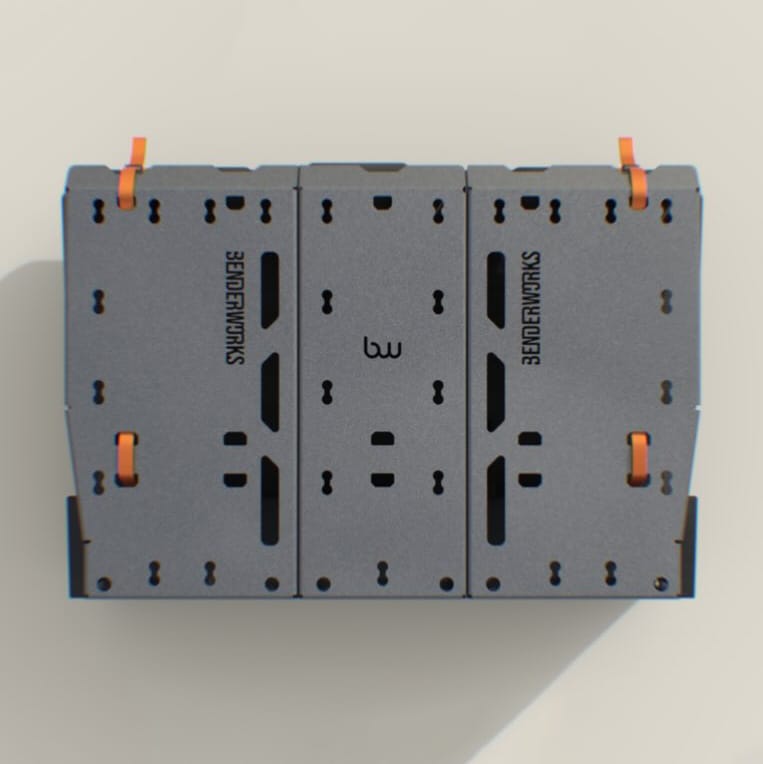
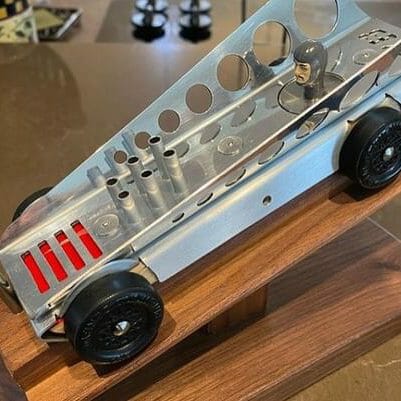
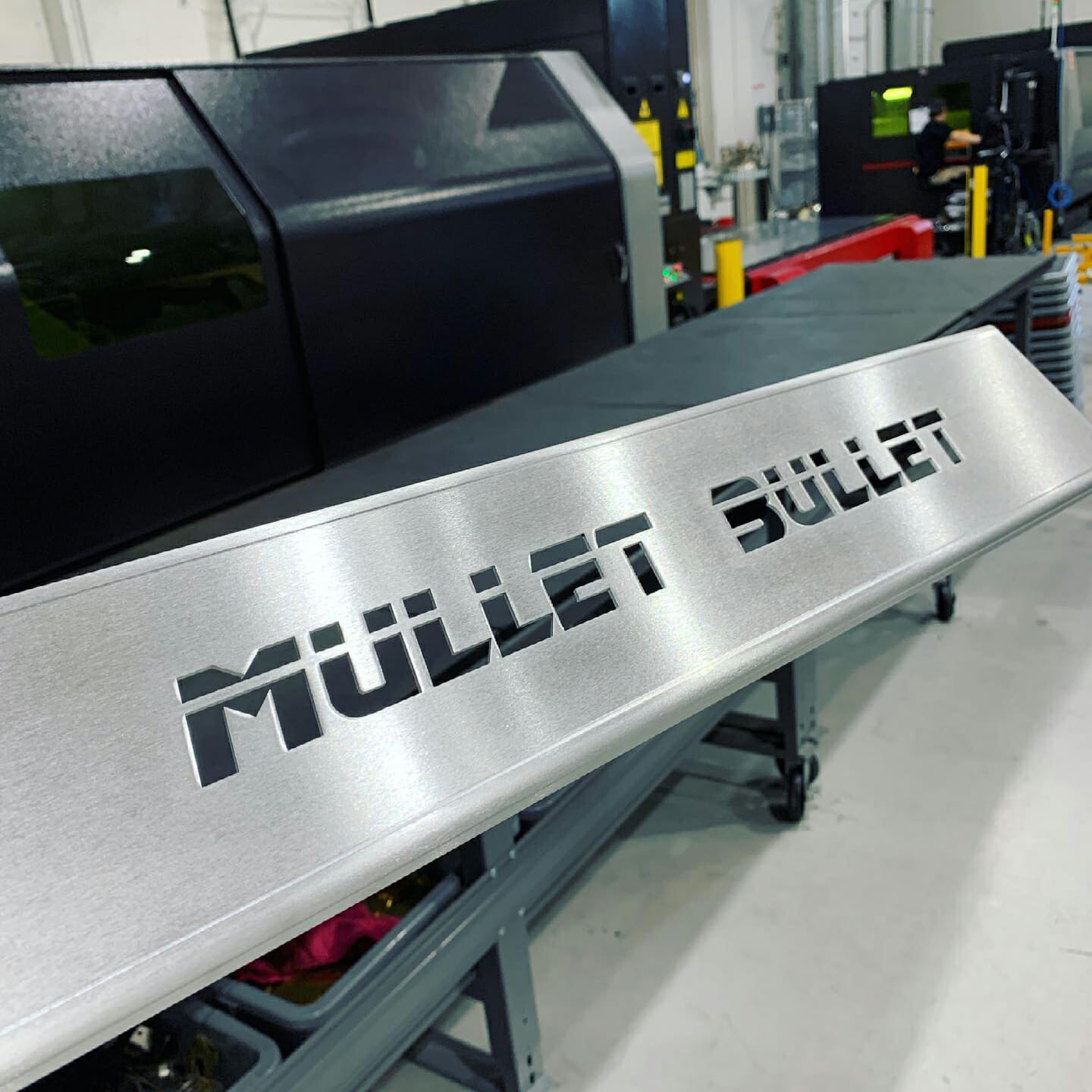
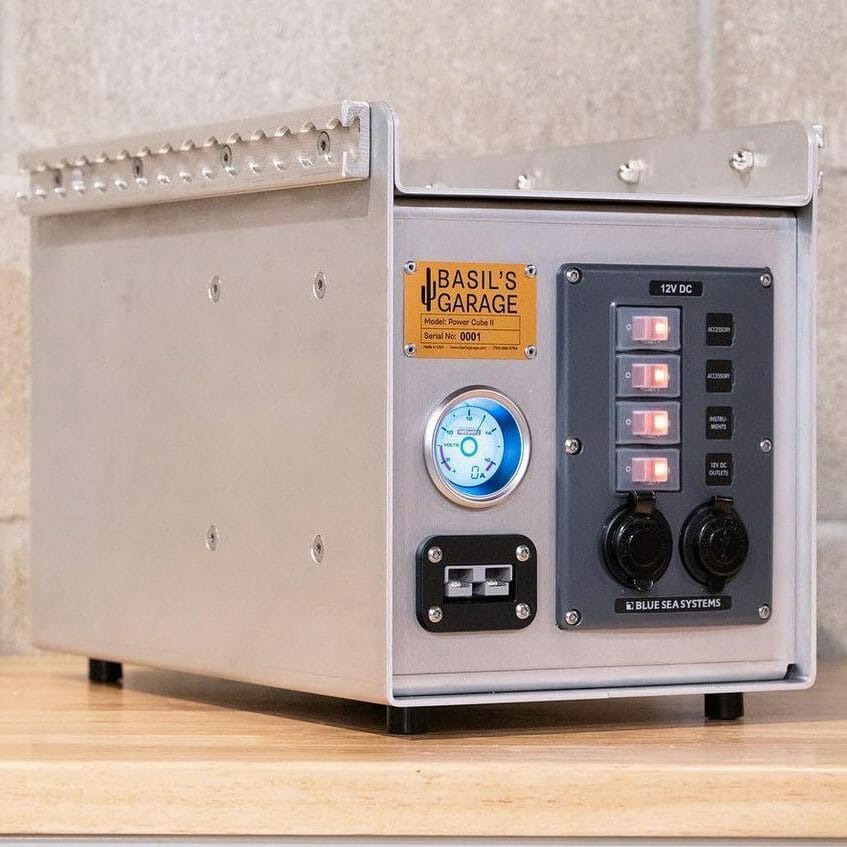
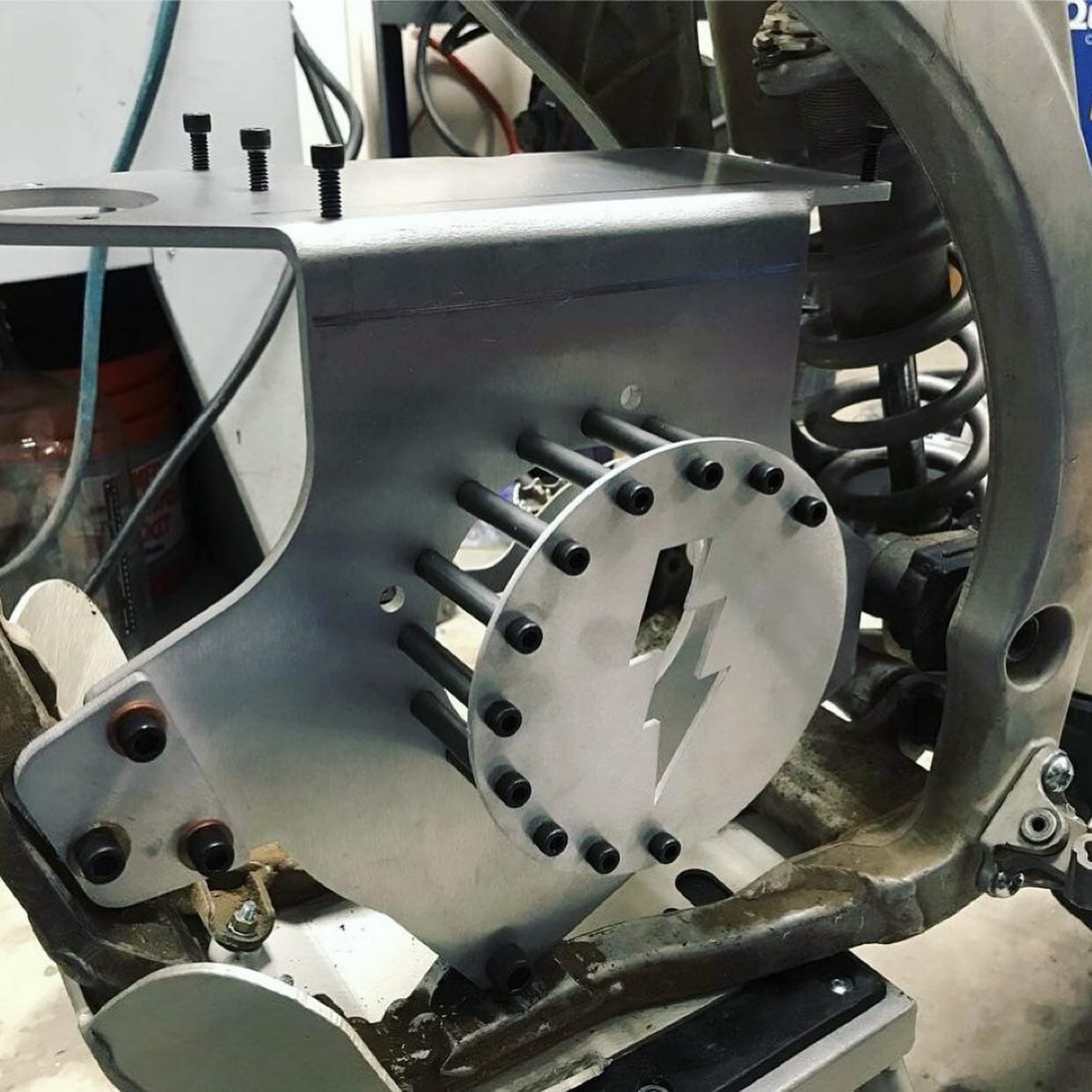
Bent parts made by SendCutSend customers

Here are just a few projects we have bent for our customers

Please note: Pricing examples on our website are provided as general estimates and may not always reflect current prices. While we strive to keep these examples accurate, uploading your file is the best way to see instant current pricing.

Start your first SendCutSend project today!

Upload your CAD design, or try one of our customizable part templates to get instant pricing on your custom laser cut parts. All delivered to your door in a matter of days.

CNC Bending Services: specifications, materials, and design guide

Key takeaways:

  • CNC bending offers unmatched precision, efficiency, and flexibility.
  • Proper engineering, including allowances, springback, and tooling, ensures predictable outcomes.
  • SendCutSend’s CNC bending service empowers designers, makers, and engineers with fast, reliable, and expertly finished results.

Understanding CNC bending

In modern fabrication, CNC bending is the backbone of precision and efficiency. For makers, engineers, and purchasing teams seeking consistent, high-quality components—whether one-offs, prototypes, or production runs—CNC bending delivers unmatched accuracy, fast throughput, and minimal setup times. At SendCutSend, mastering CNC bending isn’t just a service, it’s a commitment to performance.

What is CNC bending?

CNC (Computer Numerical Control) bending harnesses digital files and software to drive press brakes with exacting control. The punch and die system shapes metal into V-, U-, or channel profiles. The operator programs angles, bend sequences, and pressures, and the machine replicates them flawlessly, every time.

Core CNC Bending Techniques

  • Air Bending: The punch presses the sheet into a V-die without fully contacting the die bottom, allowing flexible angle options with fewer tools.
  • Bottoming: Ensures tighter tolerances by fully seating the sheet into the die.
  • Coining: Applies high force to permanently shape the bend—ideal for exact flatness and tight radii.
  • Roll/Retract/Rotary and Emboss Bending: For curves, ornamental designs, or functional textures. Often used in specialized or high-volume runs.

Engineering essentials

  • Bend allowance, deduction, and K‑Factor: These formulas help calculate how much flat material is consumed when bending. Precise measurements prevent dimensional issues.
  • Springback compensation: Because materials flex elastically post-bend, CNC systems over-bend and recalibrate to maintain accuracy.
  • Tooling & material concerns: Match dies and punches to material type, thickness, and bend radius. Avoid grain cracking, and plan bends to prevent distortion.

Why CNC bending delivers superior results

  • Unmatched precision & consistency: Machines achieve tolerances as precise as ±0.05 mm, no operator variability.
  • Speed & efficiency: Bend cycles can be sub-second, trimmed by rapid setup and stored programs.
  • Lower costs & less waste: Automating setup and nesting minimizes waste and labor, increasing throughput per hour.
  • Wide material compatibility: CNC bending handles steel, aluminum, stainless, copper, brass, and more.


Common questions (Q&A)

What thicknesses can you bend?

We handle thin to medium sheet stock—exact limits depend on material type and tooling. Let us know your specs.

How accurate are bends?

Standard runs yield ±1° or better.

How do you prevent bends from springing back?

We compensate in programming and verify accuracy with first-piece inspections. Empirical data fine-tunes final results.

Can features near bend lines distort?

 Yes, holes, slots, or cutouts should be spaced at least twice the material thickness away.

Do you offer additional finishing?

Absolutely: deburring, powder coating, anodizing, and more, we have options to suit functional or aesthetic needs. 

Best practices & design tips

  • Plan bend order to avoid tool collisions and ensure positive part flow.
  • Label bend orientation clearly (inside/outside, bend angle, radius).
  • Submit complete CAD files, including flat patterns and thickness.
  • Prototype if necessary to test springback or tight tolerances.
  • Batch similar jobs together to reduce setup time and cost.

Typical applications & industries

IndustryUse Case Examples
Enclosures & BracketsEnclosures, panels, chassis, brackets—accurate and fast
ArchitectureBuilding panels, supports, decorative forms
Automotive & AerospaceLightweight parts with high precision and repeatability
Consumer AppliancesDurable and precise shape components like brackets or supports

SendCutSend’s CNC bending advantage

At SendCutSend, we deliver:

  • Streamlined ordering — Upload DXF/DWG and get instant pricing.
  • Expert design review — We catch issues early and recommend improvements.
  • Rapid turnaround — From design to shipping in just days.
  • End-to-end service — CNC bending plus optional finishing—no need for multiple vendors

Get instant pricing for bending