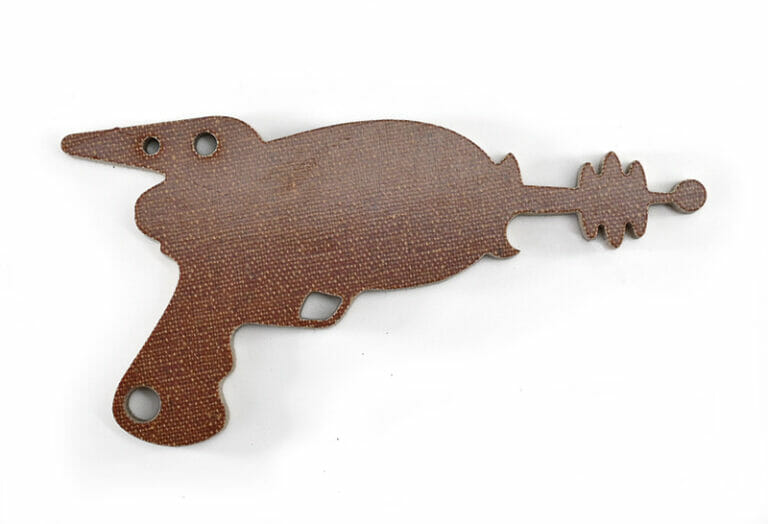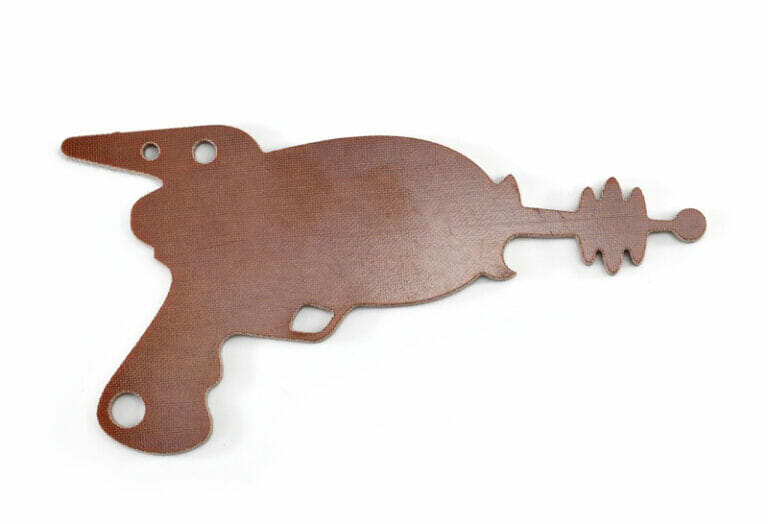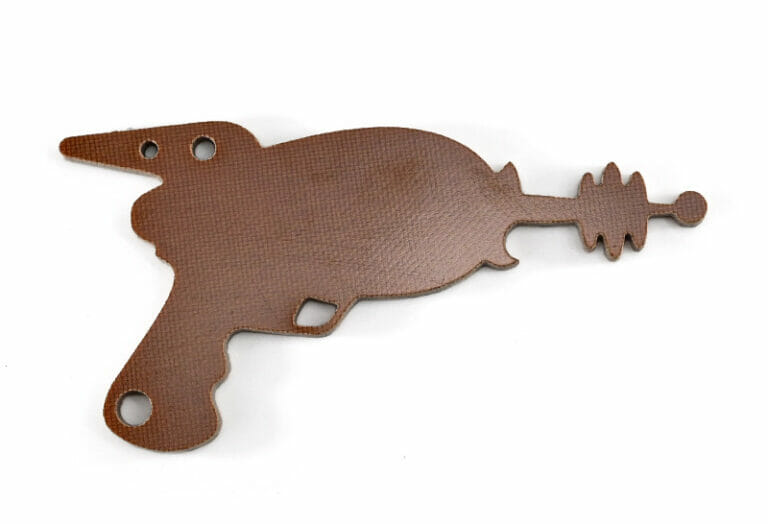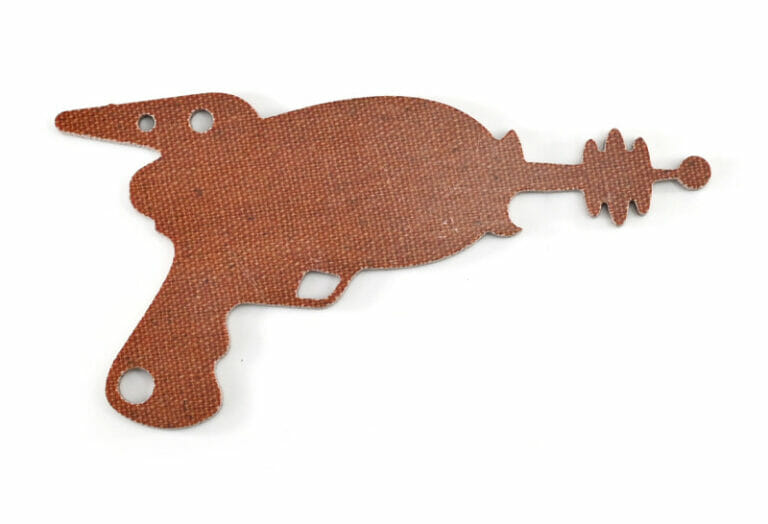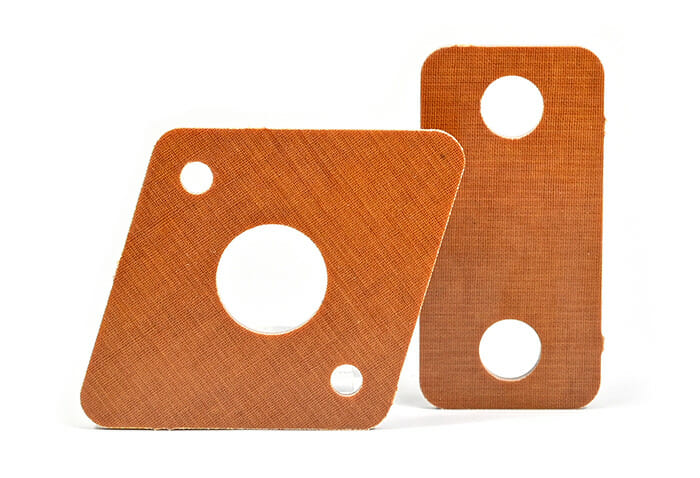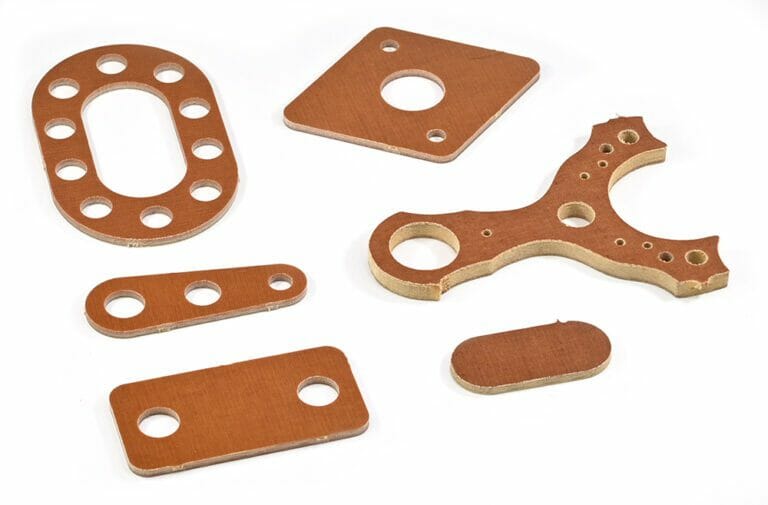
SendCutSend offers custom waterjet cutting for LE Phenolic Linen

LE Phenolic Linen (Micarta)

Need some parts made with major insulating capabilities? Or maybe you need something that fits the electrical specs of your project but also needs to be machinable for your more complex designs? LE Phenolic Linen parts waterjet cut though SendCutSend can help make sure that your ideas function as intended.

SendCutSend offers custom waterjet cutting for LE Phenolic Linen

LE Phenolic Linen size and thickness options

Min/max sizes for cutting:

A: 1″ x 2″
B: 30″ x 44″
C: 30″ x 46″

Available Thicknesses:

.125″ (3.18mm)
.250″ (6.35mm)
.375″
(9.53mm)

SendCutSend cuts G10/FR-4 in a several sizes and thicknesses. Instant quoting is available for parts as small as 1″ x 2″ and as large as 30″ x 44″. Larger parts, up to 30″ x 46″, can be ordered through a custom quote. This material is available in four thickness options: .063″ (1.63mm), .125″ (3.18mm), .250″ (6.35mm), and .375″ (9.5mm).

LE Phenolic Linen material details and specifications

.125" LE Phenolic Linen (Micarta)

Material Details & Specifications

.250" LE Phenolic Linen (Micarta)

Material Details & Specifications

.375" LE Phenolic Linen (Micarta)

Material Details & Specifications

3.18mm LE Phenolic Linen (Micarta)

Material Details & Specifications

6.35mm LE Phenolic Linen (Micarta)

Material Details & Specifications

9.5mm LE Phenolic Linen (Micarta)

Material Details & Specifications

What to expect with your Phenolic parts

Visual variances will be present between parts.

Get started with instant pricing with a sample file!

Get started with instant pricing!

MACHINABLE
IMPACT RESISTANT
Moisture Resistant
Get custom waterjet cut LE phenolic parts from SendCutSend

What is LE Phenolic Linen?

Our LE Linen Phenolic (also known as Micarta) is a high-density mixture of phenolic resin and fine weave cotton cloth fabric. Linen grade phenolic material is more machinable than other grades and can retain finer details than similar materials. It has the best electrical properties of cotton-grade industrial laminates due to its superior moisture resistance.

What can you make with LE Phenolic Linen parts?

With outstanding dimensional stability and remarkable creep resistance, this material can be used in many of the same applications as aluminum at half the weight. This resin-saturated fabric lends your projects physical toughness, abrasion, friction, and impact resistances, and even greater fatigue strength.

In addition, the lifetime of LE Phenolic linen is exceptional, and low cost, when factoring in its natural chemical and corrosion resistance. You’ll find that phenolic linen is well-suited to extremely humid environments where strength is still as important as corrosion resistance.

Our waterjet cut LE Phenolic Linen is guaranteed

We guarantee awesome quality parts. If you’re not 100% happy, we’ll give you a refund or remake on the spot – no questions, no hassle.
SendCutSend's custom waterjet cut LE phenolic parts come with a money-back guarantee

LE Phenolic Linen FAQs

LE Phenolic Linen is available in three thickness options: .125″ (3.18mm), .250″ (6.35mm), and .375″(9.53mm).

For your LE Phenolic Linen parts, SendCutSend offers instant quoting for dimensions between 1″ x 2″ and 30″ x 44″.

You can add the following services to your LE Phenolic Linen parts:
Waterjet Cutting

Start your first SendCutSend project today!

Upload your CAD design, or try one of our customizable part templates to get instant pricing on your custom laser cut parts. All delivered to your door in a matter of days.

LE phenolic linen (Micarta): Durable, stable, and machinable composite for high-performance parts

LE Phenolic Linen, often referred to by the trade name Micarta®, is a high-pressure laminate made from fine-weave linen fabric and phenolic resin. The result is a material that’s incredibly strong for its weight, electrically insulating, dimensionally stable, and unusually machinable for a composite. Fabricators choose LE phenolic linen when a part needs rigidity without brittleness, excellent wear resistance, and stable performance in electrical or mechanical environments. It offers a unique combination of toughness and machinability that metals and plastics can’t replicate on their own. At SendCutSend, we waterjet cut LE phenolic linen in .125″, .250″, and .375″ thicknesses to ±.009” tolerance, ideal for structural plates, bushings, spacers, insulators, and precision components where stability matters.

Key things to know about LE phenolic linen

  • Excellent electrical insulation: One of the most common industrial insulation materials thanks to low moisture absorption and stable dielectric properties.
  • Tough and wear-resistant: Strong, impact-resistant, and capable of handling friction, sliding contact, and repetitive stress.
  • Low moisture absorption: Maintains dimensional stability in humid environments.
  • Lightweight but rigid: Stronger and stiffer than plastics like ABS but significantly lighter than metals.

Why fabricators choose LE phenolic linen

Fabricators choose this material because it behaves like a hybrid of metal and engineered plastic: tough enough to take mechanical load, but light and stable enough for precision applications. Some ways fabricators are using LE Phenolic

  • In electrical assemblies: It’s one of the most stable, dependable insulating materials with excellent dielectric properties even in variable humidity.
  • In mechanical settings: It withstands impact, wear, and vibration without cracking, deforming, or absorbing moisture.
  • In outdoor or industrial environments: It resists oil, fuel, solvents, and general mechanical abuse.

LE phenolic linen occupies a unique space. When plastic is too soft and metal is too conductive or heavy, this laminate delivers reliability.

What are the strengths and advantages of LE Phenolic?

  1. Excellent machinability Unlike many composites, LE phenolic linen can be machined with carbide tools, drilled, and tapped cleanly, making it ideal for parts requiring threaded holes or precise countersinks.
  2. Electrical insulation One of the most stable dielectric materials. It’s perfect for terminal boards, switch plates, and non-conductive hardware.
  3. Dimensional stability Low moisture absorption means parts stay flat and remain true-to-size even in humid environments.
  4. High impact and wear resistance The linen fibers distribute load and resist cracking, making it suitable for bearings, bushings, and sliding components.
  5. Lightweight and rigid Offers a stiff, solid feel without the weight of aluminum or steel.
  6. Chemical and oil resistance Resistant to lubricants, hydraulic fluids, fuels, and solvents commonly found in mechanical assemblies.

What are the trade-offs and limitations of LE Phenolic?

  1. Not suitable for high temperatures The phenolic resin begins to degrade above ~250°F. Avoid using LE phenolic linen near engines, heating elements, or high-friction heat sources.
  2. Edges show the laminate layers The waterjet exposes the layered structure. Some users like it, but it may require sanding for aesthetic applications.
  3. Cannot be laser cut Lasers scorch and delaminate the resin/fabric layers. Waterjet is the only appropriate method for cutting LE Phenolic (and waterjet cutting is what’s offered at SendCutSend for LE Phenolic).
  4. Brittle in thin cross-sections Small tabs, narrow features, or long thin arms can break due to the composite’s layered nature.
  5. Not UV-stable long-term Prolonged direct sunlight can dull or discolor the surface.

What should you consider when building with LE Phenolic parts?

Waterjet cutting

SendCutSend waterjet cuts LE phenolic linen to ±.009” accuracy. Waterjetting avoids scorching and preserves structural integrity across the layers.

Edge finish

  • Edges will have a slightly rough, matte texture due to the waterjet.
  • Edges can be lightly sanded to improve appearance or smoothness.
  • The layered structure becomes visible on cut edges — normal for phenolic laminates.

Design LE Phenolic parts for manufacturability

For best results:

  • Keep holes larger than the material thickness.
  • Use fillets on inside corners to reduce stress concentrations.
  • Avoid long, narrow fingers or unsupported tabs.
  • Mounting holes should include washers to distribute load.
  • Remember: this material is not bendable.

More guidance is available in SendCutSend’s design guidelines.

How to approach joining and assembly for LE Phenolic parts

LE phenolic linen works well with:

  • Screws and bolts (use moderate torque)
  • Tapped threads
  • Epoxies and structural adhesives
  • Mechanical fasteners and standoffs

Avoid welding or solvent-based bonding, neither is compatible with thermoset phenolic resins.

What are the most common use cases and applications?

You’ll see LE phenolic linen used in:

  • Electrical insulation components
  • Switchboards, terminal plates, standoffs
  • Gears, bushings, and wear pads
  • Fixtures and jigs for machining or assembly
  • Knife handles and tool grips
  • Industrial spacers and non-conductive hardware
  • Automotive and aerospace vibration-damping parts

It excels in industrial, mechanical, and electrical environments where stability and toughness matter most.

When should you use LE phenolic linen?

Choose LE phenolic linen when you need a strong, stable, lightweight material that resists wear, absorbs vibration, and provides excellent electrical insulation. It outperforms plastics in rigidity and toughness, and outperforms metals in weight, machinability, and non-conductive performance. At SendCutSend, we waterjet cut LE phenolic linen in .125″, .250″, and .375″ thicknesses to ±.009″ accuracy, shipping in 2–4 days. Whether you’re building electrical housings, mechanical fixtures, or high-performance components, this composite offers reliability and precision in demanding applications.