Hardboard: Smooth, stable fiberboard for laser cutting, templates, fixtures, and craft projects
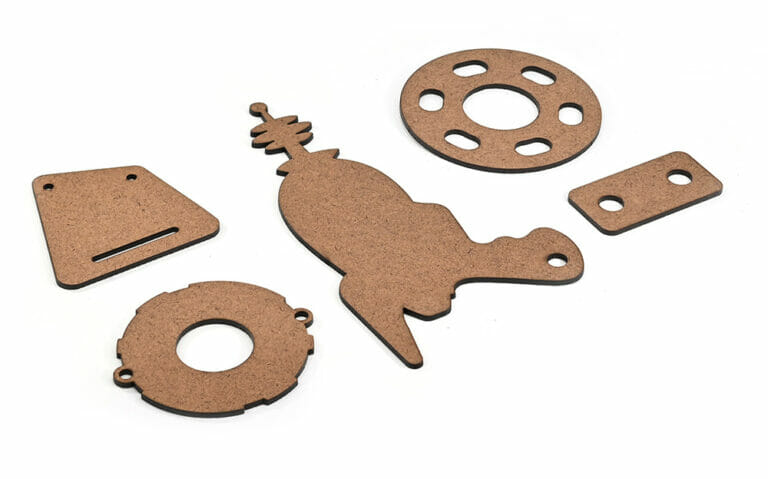
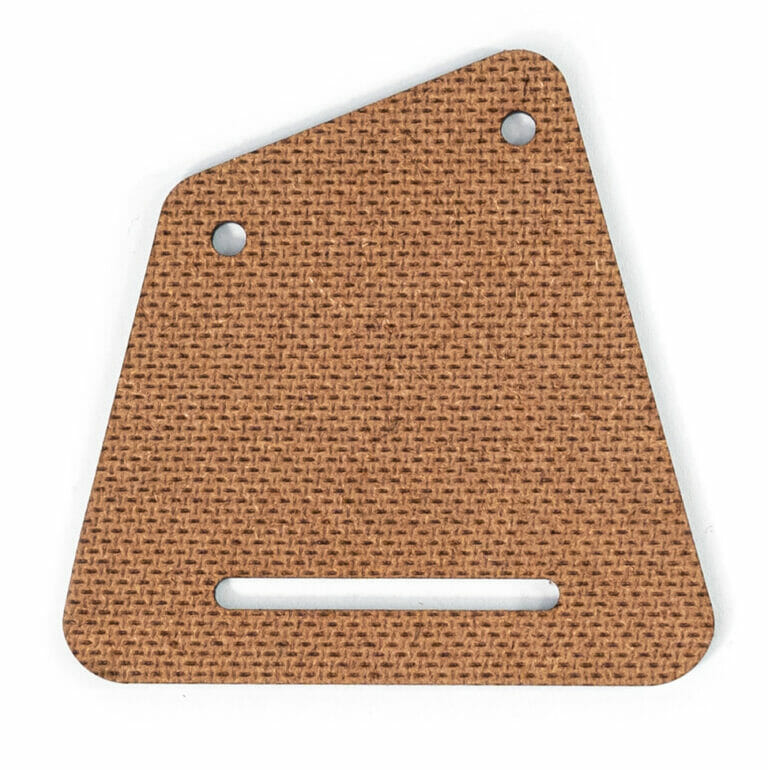
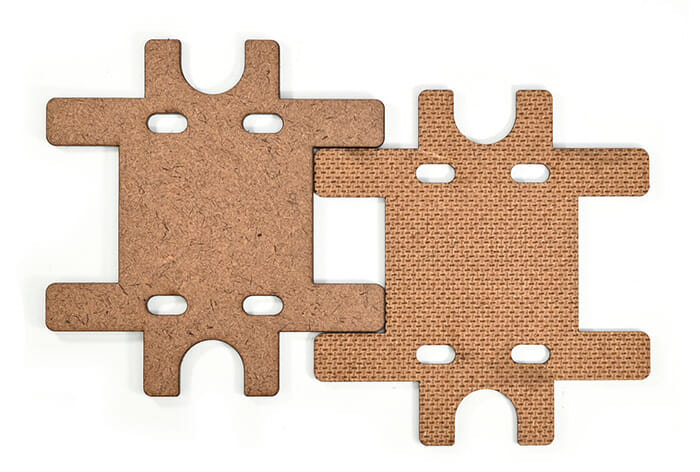
Hardboard (often called HDF or high-density fiberboard) is a dense, smooth, uniform wood fiber sheet frequently used for jigs, templates, backings, fixtures, signage, and craft work. Unlike MDF, hardboard is pressed without added resin binders, resulting in a tougher, more flexible, and more impact-resistant panel. Hardboard is ideal for laser cutting thin, stable wood parts. At SendCutSend, we laser cut globally-sourced .125” hardboard to ±.009” precision, producing clean, reliable parts for designers, makers, engineers, and fabricators.
What are the key things to know about hardboard?
- Dense and uniform: no grain direction and no internal voids.
- Flexible but strong: bends slightly without cracking.
- Very smooth surface: easy to paint, score, and finish.
- Laser cuts cleanly: predictable edges and minimal splintering.
- Affordable and versatile: excellent for templates, backing boards, and craft components.
Why do fabricators and makers use hardboard for templates and laser-cut projects?
Hardboard is chosen because it strikes a balance between cost, stability, and cut quality. It’s denser and smoother than MDF, more reliable than cardboard, and far cheaper than plywood — making it an ideal material for:
- Jigs and fixtures
- Tooling templates
- Stencils and guides
- Backer boards
- Signage and craft pieces
- Prototype parts
- Spacer plates
- Decorative laser-cut designs
Fabricators like hardboard because it maintains its shape, doesn’t splinter, and cuts evenly across the entire sheet. Makers choose it because it’s inexpensive, forgiving, and finishes beautifully.
How well does hardboard laser cut?
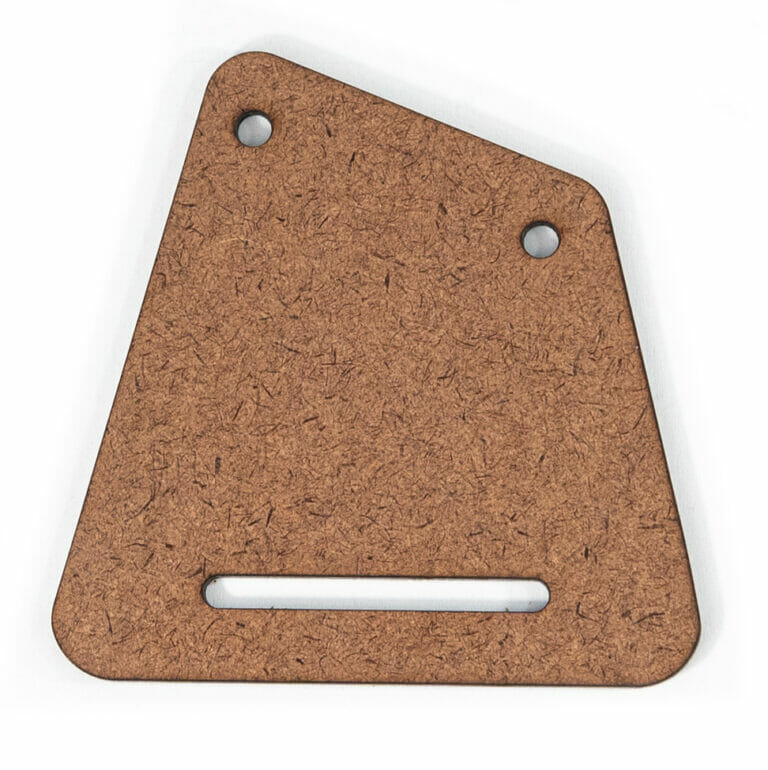
Hardboard is generally excellent for laser cutting, resulting in high-quality completed laser-cut parts. Here’s what to expect: Clean, consistent edges Hardboard laser cuts very cleanly due to its dense, uniform fiber composition. Moderate edge darkening Laser cutting leaves dark brown edges, similar to MDF. This is normal and expected for fiberboard. Smooth surface with minimal burn marks Most burn residue wipes off with a cloth or light sanding. Very fine detail possible Because there is no grain direction, small internal features cut cleanly. No voids or blowouts Unlike plywood, hardboard has no internal gaps, so cut quality is consistent across the sheet. Hardboard is one of the most reliable wood-based materials for laser-cutting small details or thin features.
What are the advantages of using hardboard?
1. Hardboard has a very smooth surface
Hardboard has one of the cleanest surfaces of any sheet wood product, making it ideal for:
- Painting
- Vinyl application
- Scoring
- Panel backers
- Decorative parts
2. Hardboard has uniform composition with no grain
This gives hardboard predictable performance when laser cutting and prevents grain-related tear-out found in plywood.
3. Hardboard is affordable
Hardboard is significantly less expensive than birch plywood or hardwood sheets, making it perfect for:
- Prototyping
- Mass production
- Fixtures and stencils
- Classroom or educational projects
4. Hardboard is tough and flexible
Unlike MDF, hardboard bends slightly without snapping. This makes it more resistant to impact and suitable for parts that need minor flex.
5. Hardboard is stable and flat
Hardboard remains flat across its surface and is resistant to warping under normal indoor conditions.
What are the limitations or drawbacks of hardboard?
1. Not moisture resistant
Hardboard absorbs water and will swell or warp if exposed to moisture. For outdoor or wet environments, consider:
2. Burns easily with prolonged laser exposure
While hardboard cuts cleanly, thick engraving or slow cutting can darken or scorch the surface.
3. Limited thickness (.125” only)
Hardboard is not available in varying thicknesses; it’s a thin, utility-oriented material.
4. Not structurally strong
Hardboard is not suitable for load-bearing parts or high-strength assemblies.
5. Difficult to join mechanically
Screws can split the board if over-tightened. It’s best used for glued or lightly fastened assemblies.
How should I design parts for hardboard?
Design considerations for hardboard center around its thin profile and dense fiber structure.
Recommended design practices for parts made out of hardboard:
Avoid extremely thin “fingers”: Features thinner than 0.08″–0.10″ can be fragile. Use fillets to prevent cracking: Rounded inside corners reduce stress concentration. Consider kerf and edge darkening: Laser kerf is consistent, but friction-fit parts may require minor adjustment. Allow for fragile edges: Avoid placing extremely small holes or notches near part corners. Paint or seal after cutting if needed: Hardboard accepts paint well, but sealing also helps resist humidity. Check out SendCutSend’s design guidelines for more tips on how to prepare your file for cutting with SendCutSend.
Where is hardboard most commonly used?
Hardboard is widely used in woodworking, crafting, laser cutting, prototyping, and industrial design. Some common applications include:
- Backer boards for frames and displays
- Laser-cut signs and décor
- Jigs, fixtures, and templates
- Prototyping for furniture and models
- Packaging or insert prototypes
- Craft projects and hobby work
- Stencils, lettering, and cut-out shapes
- Protective layer boards for work surfaces
Its stability and low cost make it a go-to material for both prototypes and production craft items.
When should I use hardboard for my project?
Choose hardboard when you need a thin, smooth, affordable fiberboard that cuts cleanly with a laser and is ideal for:
- Templates
- Signs
- Fixtures
- Stencils
- Model components
- Prototyping
- Backer panels
- Craft and décor projects
Hardboard is perfect when the priority is price, cut quality, and surface finish, but not strength, moisture resistance, or outdoor performance. SendCutSend laser cuts .125” hardboard with ±.009” precision and 2–4 day lead times, giving you a dependable, smooth, laser-friendly material for creative and functional projects.