
2 Thicknesses
Production Time
Waterjet cut, +/- .009" tolerance
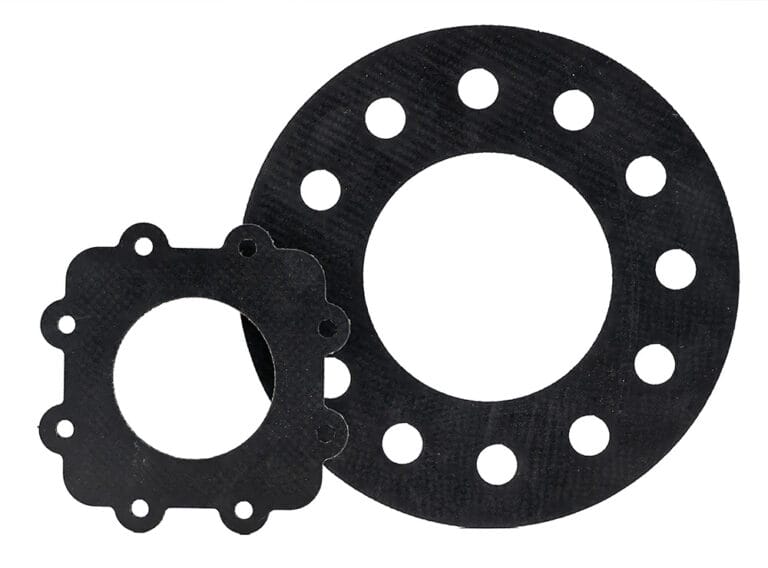
Fabric Reinforced Neoprene rubber is a tough neoprene rubber sheet strengthened with one or two plies of woven nylon, giving it far greater tear resistance, dimensional stability, and overall durability than standard neoprene. The embedded fabric keeps the material from stretching, deforming, or ripping under load, making it ideal for high-stress applications that see repeated flexing or mechanical pressure. With its improved tensile strength and long fatigue life, it’s a reliable choice for custom gaskets, seals, pads, and flexible parts that need to hold up to abrasion, weather, oils, and constant use.
This material is ideal for heavy-duty gasket and sealing applications where extra durability and resistance to stretching or tearing are essential. Here are a few of the most common use cases.
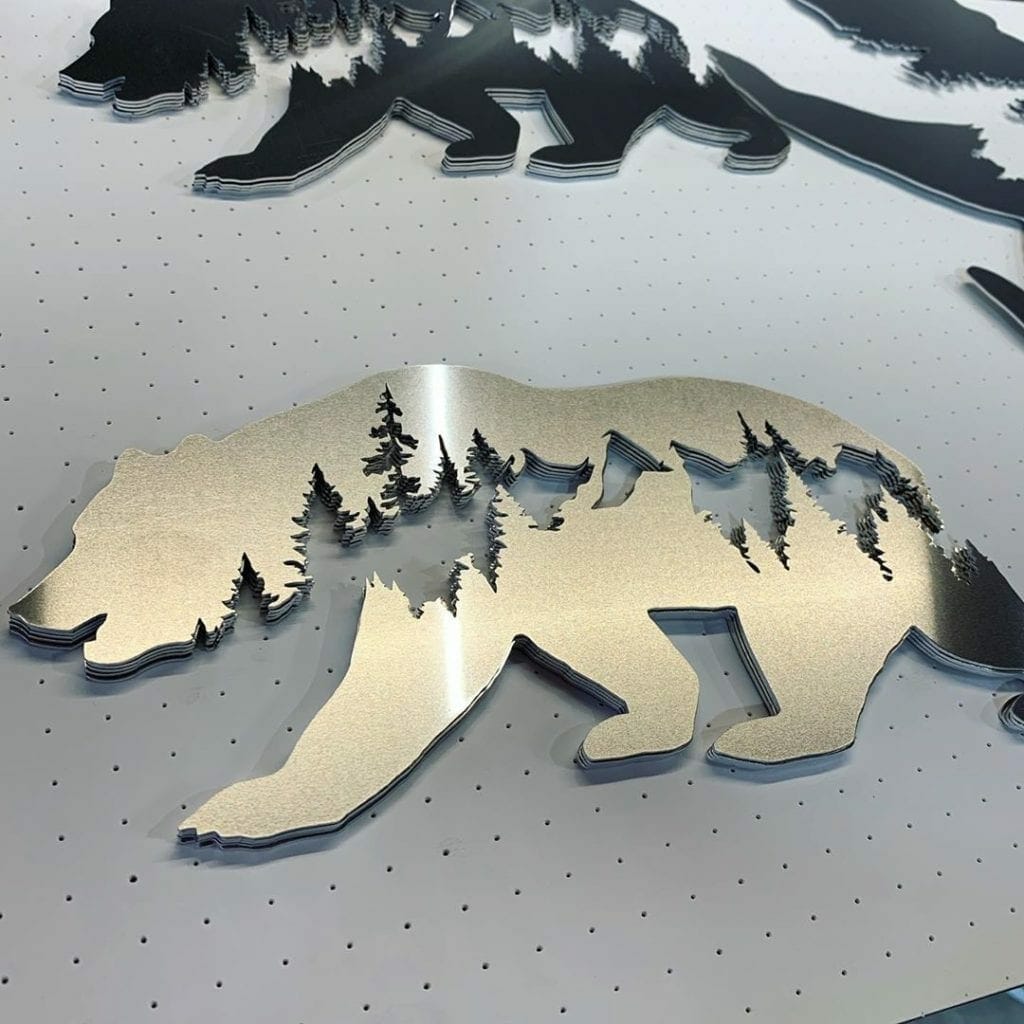
We source this high-demand metal through trustworthy suppliers with verifiable industry credentials so you don’t have to worry about it. You’ll know that our 5052 aluminum sheets are ready to be transformed into your greatest ideas.
Material certifications (PDF) are available below.
5052 Aluminum .040″
5052 Aluminun .063″
5052 Aluminum .080″
5052 Aluminum .100″
5052 Aluminum .125″
5052 Aluminum .190″
5052 Aluminum .250″
5052 Aluminum .375″
5052 Aluminum .500″
We guarantee awesome quality parts. If you’re not 100% happy, we’ll give you a refund or remake on the spot – no questions, no hassle.
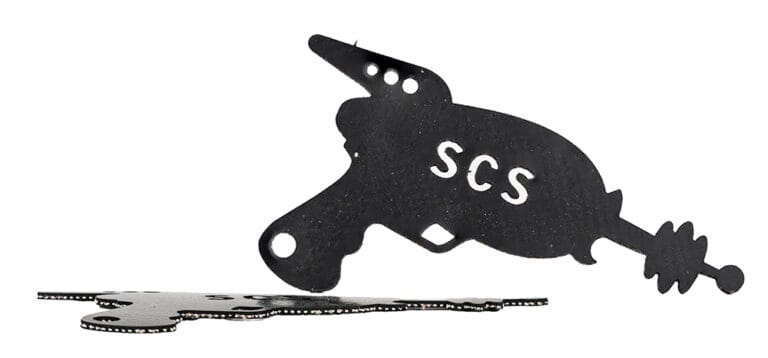
Fabric Reinforced Neoprene Rubber sheets come in .063″ (1.6mm) and .125″ (3.2mm) thicknesses.
The minimum cutting size for Fabric Reinforced neoprene Rubber is 1″ x 1″, and the maximum cut size is 30″ x 44″.
No additional services are available for fabric reinforced neoprene rubber.

We accept .ai, .dxf, .dwg, .eps, .stp, and .step

Customize one of our simple parts templates
Fabric-reinforced neoprene rubber is a tough, durable rubber sheet that includes internal layers of woven fabric to increase tensile strength, tear resistance, and dimensional stability. This reinforcement makes it ideal for gaskets, pads, diaphragms, and mechanical components that experience stretching, pulling, pressure, or repeated movement. At SendCutSend, we waterjet cut .063 inch fabric reinforced neoprene to ±.009 inch tolerance, allowing customers to create highly durable gasket profiles, impact pads, isolation components, and mechanical parts that outperform standard neoprene in high strength applications.
Fabric reinforced neoprene is selected when a design needs more tensile strength and less stretch than standard neoprene can provide. The embedded fabric layer strengthens the rubber and stabilizes its shape under load, making the material suitable for gaskets or parts exposed to tension, shear, vibration, or repeated flexing.
Fabricators choose reinforced neoprene because:
Reinforced neoprene performs well in systems that involve movement, tension, and pressure. The internal fabric layer prevents excessive stretching and helps the gasket maintain shape even when subjected to pulling forces.
Fabric-reinforced neoprene is an ideal choice when a part must:
Many fabricators use reinforced neoprene specifically when regular neoprene wears out too quickly or stretches out of shape.
The embedded fabric layer improves overall strength and prevents the material from elongating under stress.
Reinforcement helps prevent tearing at edges, bolt holes, and narrow features.
The material holds its shape even when used in parts that experience tension, bending, or shear.
Reinforced neoprene resists:
The combination of fabric and rubber cuts cleanly with waterjet technology, producing smooth edges and accurate geometry.
Reinforcement reduces softness and flexibility, which may be a drawback for low bolt load sealing.
The internal fabric layer limits how tight certain features can be cut. Extremely thin walls may fray.
Although resistant to mild oils, reinforced neoprene is not the best choice for continuous exposure to fuels or petroleum products. Buna N is better.
Applications requiring extreme heat stability should use silicone or Viton.
Because fabric fibers are present, some texture may appear along edges, especially in fine details.
Fabric reinforced neoprene:
Fabric reinforced neoprene:
Standard neoprene:
Fabric reinforced neoprene:
Standard neoprene:
Fabric reinforced neoprene is ideal for:
Standard neoprene is better for:
If a design requires more rigidity and durability, reinforced neoprene is the better choice. If it needs flexibility and compressibility, standard neoprene is typically preferred.
Waterjet cutting is the best process for reinforced neoprene because it avoids burning, melting, or damaging the fabric layer.
What to expect from waterjet cutting:
Reinforced neoprene is not suitable for laser cutting because the fabric layer does not melt like rubber, so waterjet cutting is required for clean results.
Designing with reinforced neoprene requires slightly different considerations than standard neoprene.
General guidelines are available here: https://sendcutsend.com/guidelines
Reinforced neoprene is widely used in industrial, mechanical, automotive, and marine environments. Typical applications include:
The material is often used in situations where standard neoprene fails prematurely due to stretching or tearing.
Choose fabric reinforced neoprene when your gasket or rubber part must withstand tension, tearing forces, repeated flexing, or structural load that would damage standard neoprene.
Use reinforced neoprene when you need:
It is not the best option for:
SendCutSend waterjet cuts .063 inch fabric reinforced neoprene with ±.009 inch tolerance, delivering durable, long lasting gasket and mechanical parts with 2 to 4 day lead times.


